Make room
for beauty.
A moment for you. Room for beauty.
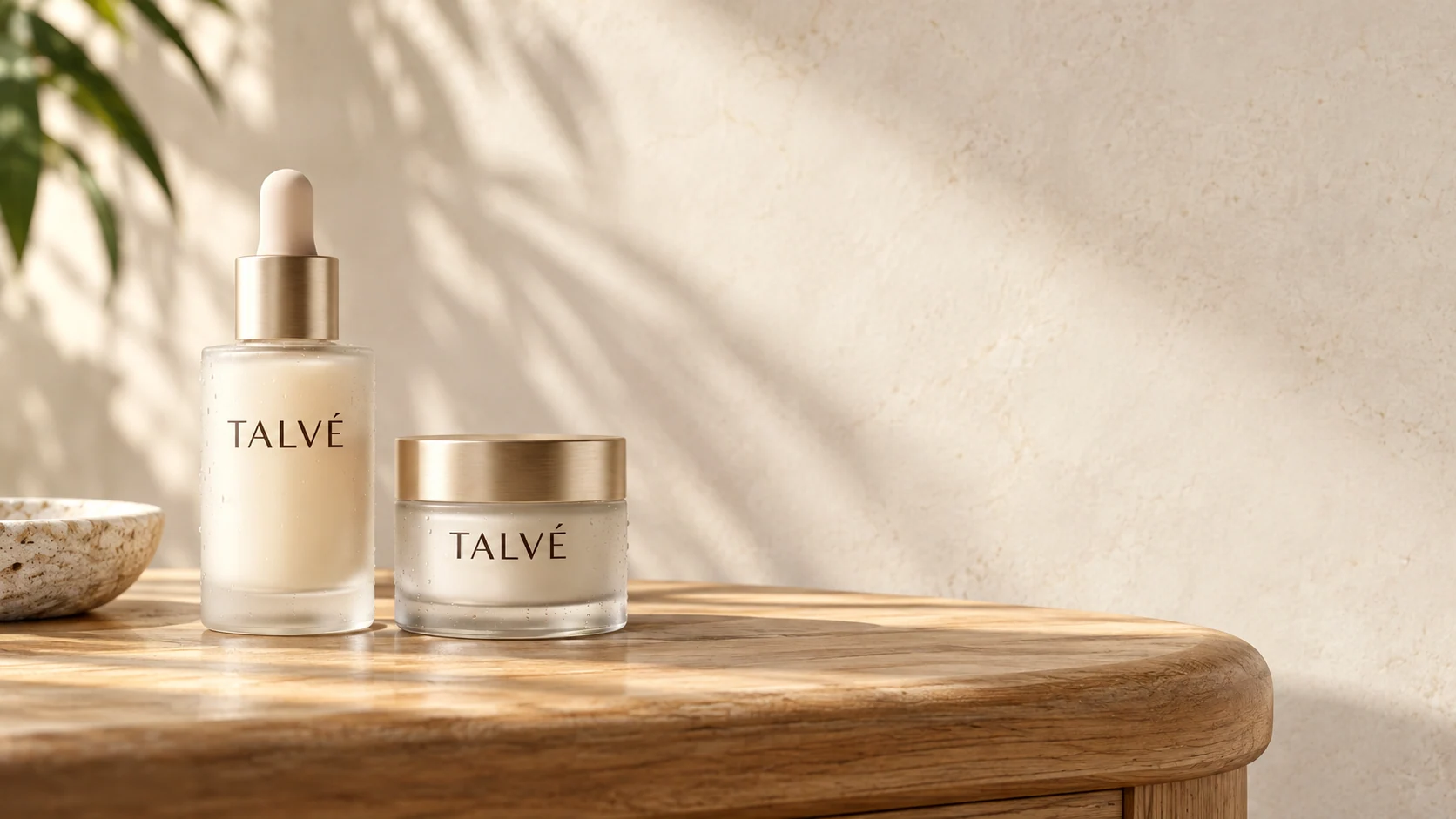
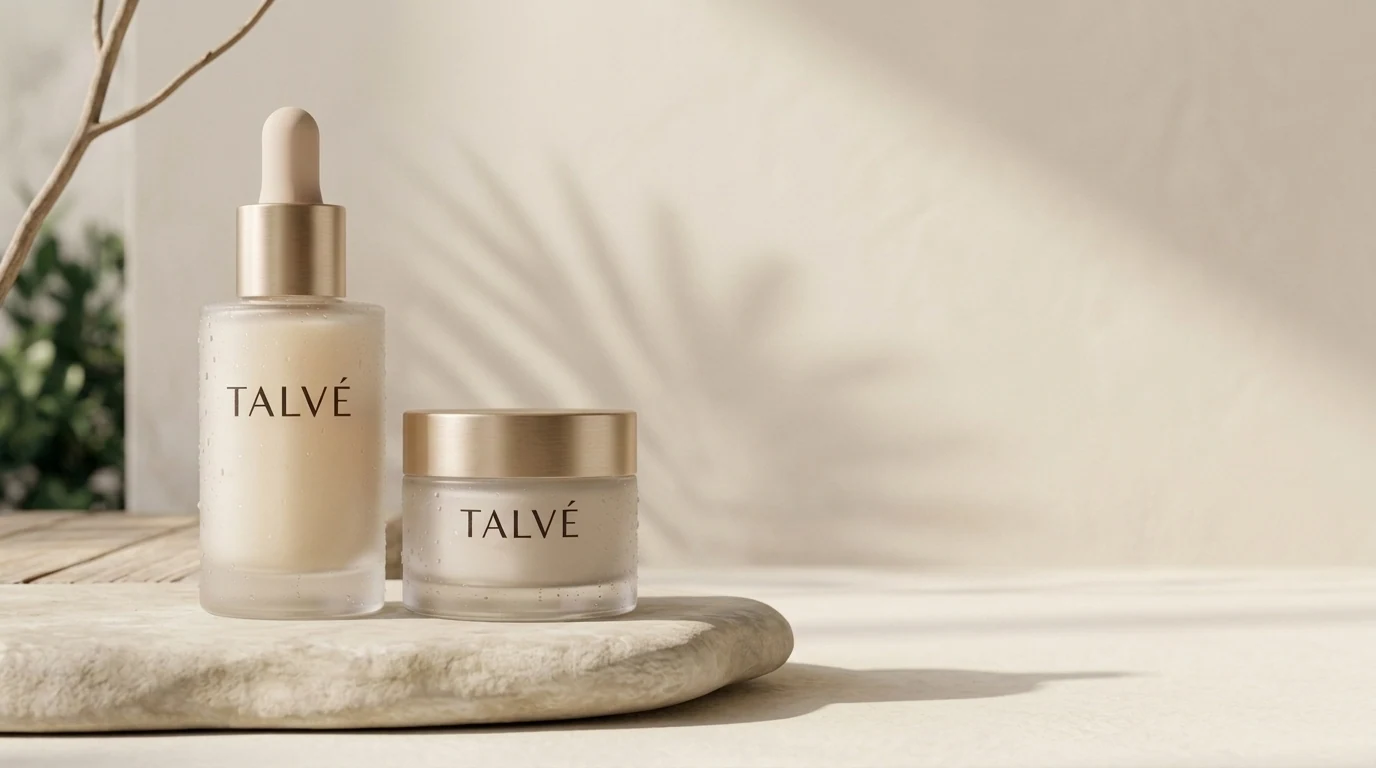
Meet the TALVÉ face serum.
Meet your next
beauty moment.
On your shelf. By your mirror. In your daily ritual.
Explore the serum and the details that draw you closer.
The face serum
The little details


A little glam.
Just because.
Dress up. Indulge a little. Make your beauty routine something to look forward to.
Discover the collection ↗
Your pace. Your ritual.
What’s on your shelf, and what feels good on your skin? Let’s put your morning and evening in order.
- 1
- 2
- 3
Your choices
Morning
Why this order?
A general order for product types. Your product instructions and dermatologist’s advice take priority.
A little deeper
What does moisture actually do?
In the skin’s outer layer, humectants such as glycerin help retain water. Emollients contribute to a smooth feel, while other ingredients reduce water loss from the surface. A formula can bring these roles together. An ingredient list alone doesn’t reveal concentrations or prove the finished product’s results.
It feels absorbed. But how far?
When a product stops feeling wet or sticky, we’re describing a surface sensation, not measuring how deeply it penetrates. Formulation, texture, amount and skin condition all matter. Moisture at the surface can be useful without a promise of delivery into living cells.
What can you feel now, and track over time?
During application you can notice spread, softness and finish. Over time, pay attention to comfort and your response while following the product’s instructions. A specific result needs testing of that formula, used in that way for a defined period. A pleasant feel and a clinical outcome can be assessed separately.
Your choices stay in this tab so you can move between pages and languages. They are not sent to a server. Start again removes them.
Your bottle and ingredients, up close
A little extra for your routine.
Explore bottle use and compare ingredient lists.
How long will your serum or cream last?
Your bottle, your routine. Enter the amount and how often you use it for an estimate. Add a price to see the cost per use, too.
How is duration calculated?
Uses = package quantity ÷ amount per use. Calendar days = uses ÷ (uses per day × days per week ÷ 7). Measurement mode uses the mean of three measurements. The range comes from the smallest and largest recorded amounts, not a statistical confidence interval.
The estimate assumes a consistent routine and fully usable contents. Residue and spills can shorten actual duration. It does not determine shelf life after opening.
Units and measurement: BIPMWhy not just count drops?
A drop or pump is not a fixed volume in this calculator. Without measured output or a manufacturer value, it is not converted to ml or grams. Mass and volume stay separate unless the product density is known.
Compare the labels before you choose.
Two packages, two lists. Paste the ingredients to see what they share and what differs. This compares the names printed on the labels.
What can an ingredient list tell you?
The list identifies declared ingredients. It does not by itself establish the full formula, exact concentrations or performance on your skin. Different names may refer to the same substance; this tool does not resolve synonyms.
For US cosmetic labels, the FDA describes descending order of predominance with exceptions, including ingredients at 1% or less and color additives. A position in the list is not an exact percentage.
Read the FDA labeling guideHow does text matching work?
Names are separated by commas, semicolons or line breaks; text within parentheses stays together. Letter case and repeated spaces are ignored. Duplicate names are counted once. The lists stay in your browser.
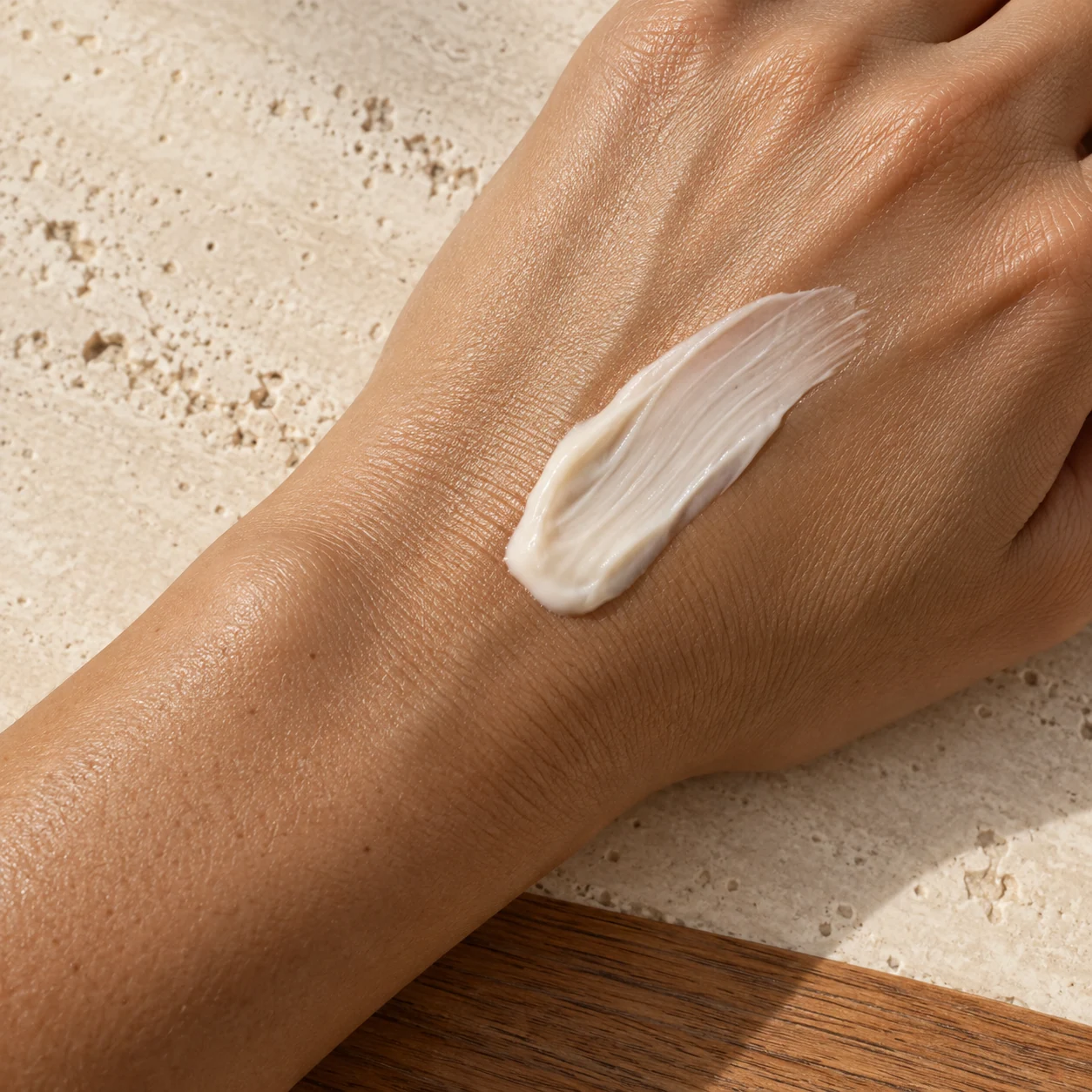
Love the texture.
Explore a little deeper.
What hydrates, what softens, and how do you read an ingredient list? Open what interests you and get to know your skincare a little better.
What does a moisturiser do?
Moisturising ingredients work in different ways: some attract and retain water in the outer skin layer, some soften the surface, and others reduce water loss. One formula can combine several types.
Glycerin and dimethicone: what is the difference?
Glycerin is an example of a humectant. Dimethicone can help reduce water loss. An ingredient’s role is part of the picture; the complete formulation and its directions matter, too.
What can the label tell you?
An ingredient list helps you see what is in a product. It does not necessarily reveal each concentration or the effect on your skin. To compare two labels, use the ingredient tool below.