
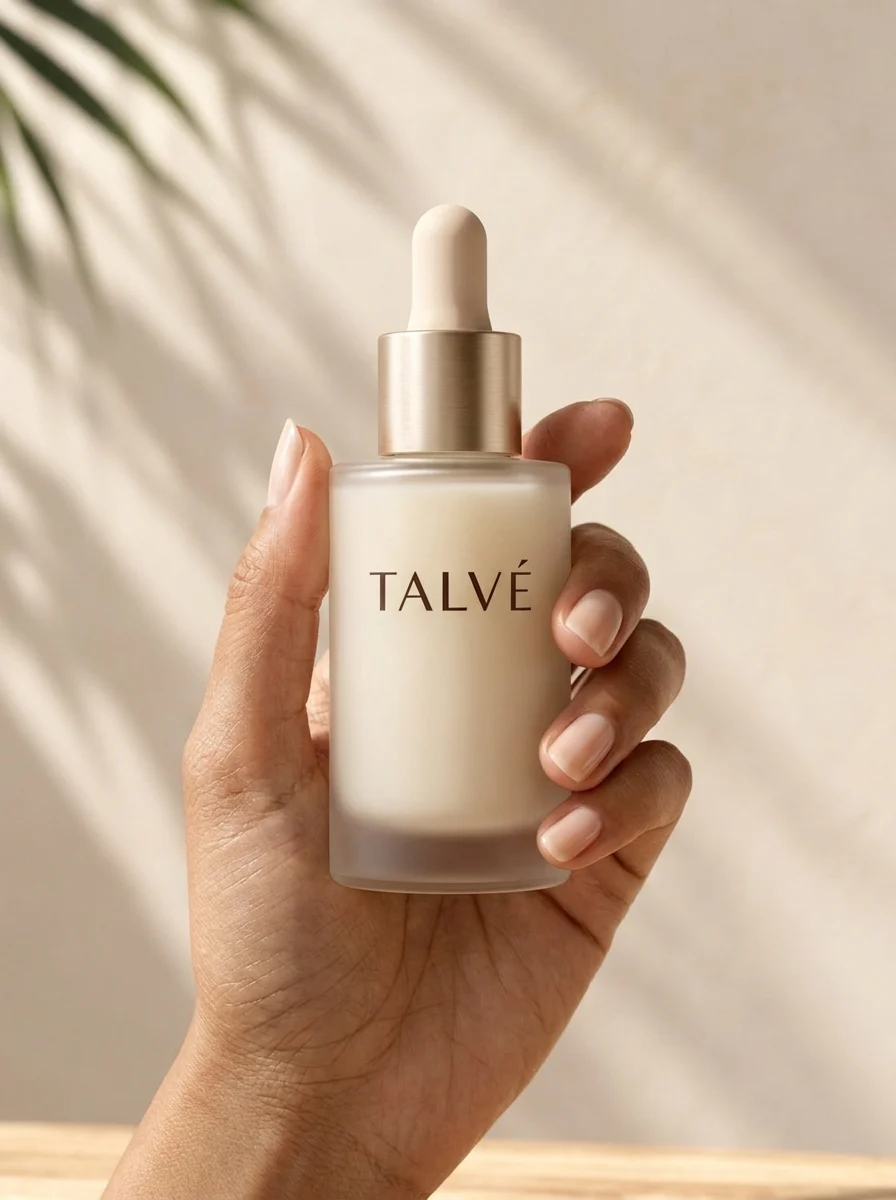
TALVÉ · Beauty, up close.
The face serumThe beauty
of hydration.
A moment for moisture before the day begins. Meet Dew Veil, and make a little room for a beauty ritual that is all yours.
Dew Veil | Hydrating serumHow does it fit your routine?
After cleansing, before the rest of your skincare ritual. Follow the packaging directions for the amount and application.
Hydration has
a softer side.
Some days, you simply want skin that feels lovely to touch. Less of that tight feeling after cleansing, more room for a ritual you enjoy. When exploring a serum, start with the feeling you are looking for.
That moment by the mirror is yours. A little time for skincare, a little space for yourself. Further down, explore the ingredients behind hydration and softness.

Your ritual.
Your own rhythm.
Start fresh
Clean skin and clean hands. A moment to leave the day behind.
Make room for serum
Apply gently, following the product directions. Take your time; more product does not automatically mean more benefit.
Finish with what feels right
Continue with the care that suits you. In the morning, make room for sun protection and follow its label directions. A hydrating serum does not replace sunscreen.

Your pace. Your ritual.
What’s on your shelf, and what feels good on your skin? Let’s put your morning and evening in order.
- 1
- 2
- 3
Your choices
Morning
Why this order?
A general order for product types. Your product instructions and dermatologist’s advice take priority.
A little deeper
What does moisture actually do?
In the skin’s outer layer, humectants such as glycerin help retain water. Emollients contribute to a smooth feel, while other ingredients reduce water loss from the surface. A formula can bring these roles together. An ingredient list alone doesn’t reveal concentrations or prove the finished product’s results.
It feels absorbed. But how far?
When a product stops feeling wet or sticky, we’re describing a surface sensation, not measuring how deeply it penetrates. Formulation, texture, amount and skin condition all matter. Moisture at the surface can be useful without a promise of delivery into living cells.
What can you feel now, and track over time?
During application you can notice spread, softness and finish. Over time, pay attention to comfort and your response while following the product’s instructions. A specific result needs testing of that formula, used in that way for a defined period. A pleasant feel and a clinical outcome can be assessed separately.
Your choices stay in this tab so you can move between pages and languages. They are not sent to a server. Start again removes them.
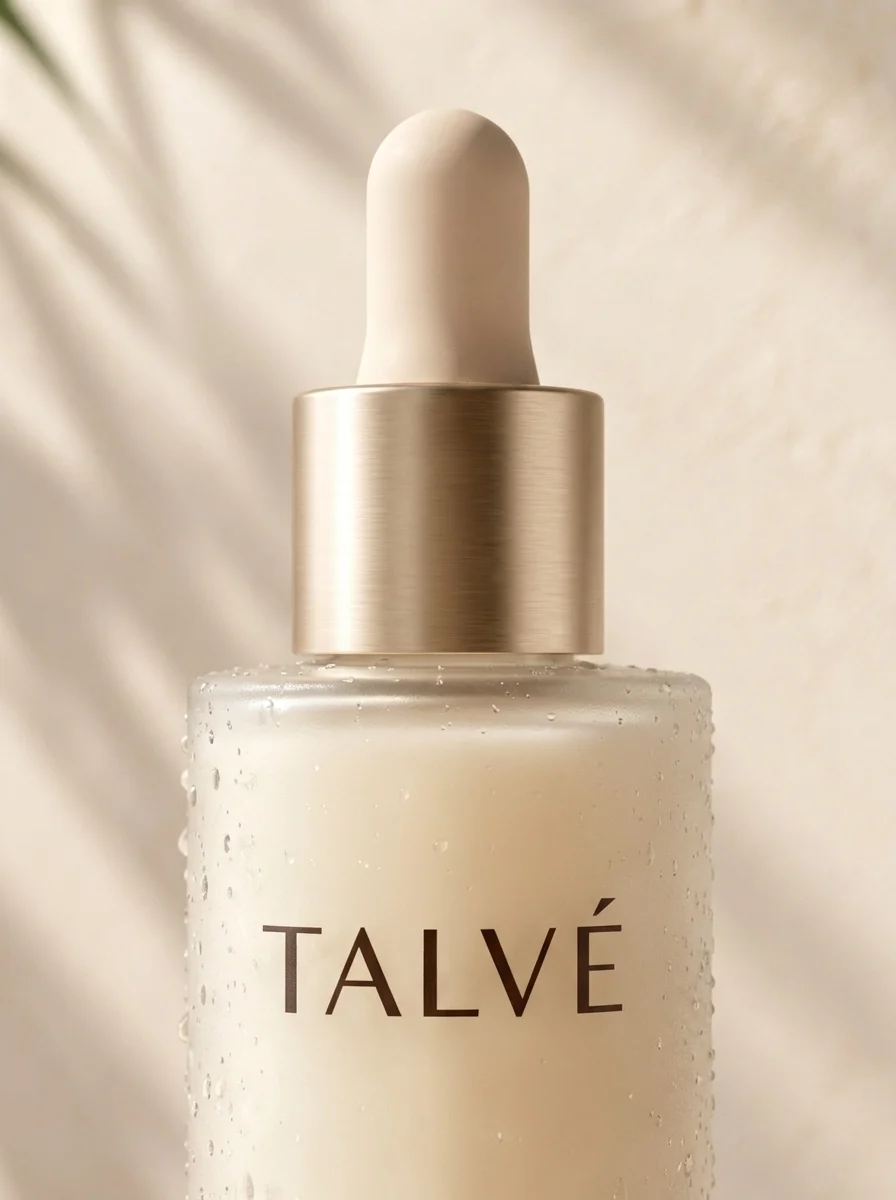
Beautiful outside.
Thought in every detail.
The glass, the feel, the turn of the cap. Beautiful details catch the eye; quality also begins with what a photograph cannot show.
Choosing the raw materials
Behind a beautiful texture is careful work. A raw material starts with a clear identity, supplier and batch number. Its specification defines what is expected; the certificate of analysis records test results against that specification. Together, they let us ask precise questions about the material in the bottle, beyond the label’s story. Raw-material quality is assessed through records and testing, rather than an oil’s colour or the word “luxury”.
Testing the complete formula
There is the quality of an ingredient, and the quality of a formula in its package. Stability, microbiological quality and compatibility between the formula and its container answer different questions. A good result in one does not replace testing the benefit promised on the label. Each claim needs evidence that fits it.
Packaging as part of the experience
Good packaging feels comfortable in the hand, opens easily and allows controlled dispensing. A legible label matters too. Impressive glass or a beautiful cap alone cannot establish how well a formula is protected: materials, mechanisms and testing of the complete package matter.
What matters in a botanical material?
A plant name is a lovely beginning. Understanding a raw material also means knowing the plant part, material form and specification. An extract, an oil and a powder are not interchangeable, even when their botanical name is similar. “Natural” alone does not describe purity, consistency or suitability for skin.
Knowing a botanical goes beyond its name. Clear identification and a defined specification help explain what enters a formula and how consistency is assessed from batch to batch.
Your ingredients, explained.
What brings moisture, what softens, and what gives that lovely texture? Paste the ingredient list from your packaging and get to know the names.
Your list stays on this page. It is not sent or saved, and clears when you change language or leave.
Explanations currently cover 12 ingredient names. The example is a reading list, not a product formula.
A little clearer. A lot more interesting.
No recognised names in this group.
What can’t a list tell you?
Explore common ingredient roles here. Names alone do not reveal concentration, absorption depth, personal suitability or finished-product results. Short- and long-term results need testing of the specific formula. Identifying fragrance is not an allergy test.
Good skin days.
A closer look.
Hydration, softness and the story behind the feel. Open whatever sparks your curiosity: what happens at the skin’s surface, what ingredient research explores, and how to make sense of the numbers.
01Hydration and softness. A lovely duet.
Think of skin feel through two separate questions: how much water is held in the outer layer, and how the surface feels to the touch. Humectants such as glycerin address the first; emollients contribute to the second. A formula can combine these roles, so the names on the front of a bottle are only a starting point.
When comparing serums, ask about the finished product too: was hydration assessed, was feel assessed, and in whom? An ingredient list helps you get acquainted; it cannot decide whether you will enjoy the texture.
02What happens at the skin’s surface?
The stratum corneum is the outer part of the epidermis. Its corneocytes sit within a lipid-rich structure. It has an important functional role in water retention and the skin’s contact with the environment, even though the corneocytes themselves are not living, dividing cells.
Cleansing and moisturising have different jobs in your routine. Cleansing removes surface residue; moisturising addresses water and the feel of the outer layer. A hydrating serum is not a cleanser. The useful questions are how skin feels, what the formula has been tested for, and how it fits with the rest of your skincare.
One useful term: stratum corneum
It is a thin layer with a complex organisation, not a uniform wrapping. Picture corneocytes and lipids arranged together: a useful way to think about structure, though it does not capture all of skin biology. For everyday skincare, the distinction matters: a smoother-feeling surface and a measurement showing less water loss are not the same thing.
03Hyaluronic acid, beyond the name
- In the study
- 76 women
- Duration
- 60 days
- Tested formula
- Cream with 0.1% HA
Sodium hyaluronate is a salt of hyaluronic acid. Its label name does not reveal a molecular-weight range, concentration or behaviour within the formula. “Smaller molecules” do not replace a finished-product test.
A 2011 study tested creams containing 0.1% hyaluronic acid of different molecular weights in 76 women over 60 days. The authors reported improved hydration and elasticity, with wrinkle-depth changes for some formulations. These were particular eye-area creams, not this serum.
The study’s concentration cannot be inferred from sodium hyaluronate’s position in an ingredient list. The molecular-weight unit kDa describes molecular size, not a penetration depth measured for a product. To connect a result to a serum, we need to know the formulation and how it was tested.
04Argan, from plant to research
- In the study
- 60 postmenopausal women
- Duration
- 60 days
- Application site
- Forearm
An open-label study followed 60 postmenopausal women for 60 days, with argan oil applied to the forearm alongside two dietary-oil groups. Researchers measured skin water content and water loss and reported improvements after topical application.
The setting matters: a particular oil, body area and population, with a dietary intervention also involved. The findings are useful ingredient background; they do not predict this serum’s performance or guarantee the same result for every skin.
05Behind the numbers on the bottle
Two measurements can tell different stories. Electrical capacitance is used to assess stratum-corneum hydration. TEWL describes water loss through skin, usually in grams per square metre per hour. Smoother-feeling skin does not necessarily show the same change in both measurements.
When an improvement percentage appears, read its note. What was measured, when, against what comparison and in which environment? Temperature, humidity, acclimatisation and measurement site provide context. A fair comparison looks at the method, not just the size of a number.
The same percentage can tell a different story
As a purely arithmetic example, a reading rising from 20 to 25 is a relative increase of 25%, but a gain of 5 units. Without the starting value, units and comparison group, the number alone says very little. These are not experimental results for any product. Even when an average changes, it does not mean every participant experienced that exact result.
Hydration in the outer layer
A question about water at the measured time and site. The method and conditions are part of the result.
Water loss through skin
A question about the rate of water movement. It cannot automatically be converted into a “hydration percentage” or a feeling of softness.
06Loved the feel. What was measured?
“My skin feels softer” describes someone’s experience of a product. An instrumental hydration reading answers a different question. Both can be useful in their own right. To understand a result, look at what was tested, when it was measured and which formula was in the bottle.
A purely arithmetic example: if 18 out of 20 participants liked the feel, that is 90% of participants. It does not mean skin hydration rose by 90%. One figure counts people; the other would describe a change in a hydration measurement. This is an illustration, not a trial result. When a headline gives a percentage, look at what it describes.
Three questions worth asking
What was tested: a raw material, a finished formula or answers to a questionnaire? What was the comparison: the starting point, a base without the ingredient or another treatment? And who took part: what was their skin like? These questions let you enjoy a product’s story while keeping its evidence in perspective. A large number in a headline cannot answer them alone.
07Make sense of the small print
An INCI list provides standardised ingredient names. It helps identify a familiar material, fragrance or something you want to investigate. It is not a complete recipe: concentrations, pH, raw-material specifications and manufacturing methods are usually absent.
Even order needs context. US labelling rules include exceptions to quantity order, such as for ingredients at one percent or less. An ingredient’s position is not a concentration calculator. The product label and the applicable market’s rules remain the reference.
Exact names are useful when comparing products. Similar plant names do not necessarily mean the same plant part or extract. A long list is not a quality score, and a short one does not prove suitability. Use the list to identify materials and ask better questions, alongside the label, the product’s purpose and information about the complete formula.
How long will your bottle last?
YOUR BOTTLE, YOUR ROUTINEYour bottle, your routine.
Enter your amount per use and routine to estimate how long the serum will last.
How is the estimate calculated?
Uses equal bottle volume divided by amount per use. Duration equals uses divided by average daily use, adjusted for the days per week you selected. If you enter a price, cost per use can also be calculated. An omitted price stays unknown; it does not become zero.
This estimate assumes consistent use and fully usable contents. Residue and spills can shorten it. It does not determine an expiry date or period after opening. Mass-based measurements also require verified density when converting between grams and millilitres.
Explore bottle use and other sizesGlad you asked.
Does a serum replace moisturiser?
Serum alongside cream? Possibly, but the name on the bottle is only a starting point. Consider the formula, its role and the feel you want. Water-attracting and softening ingredients can share one product, so counting routine steps does not measure hydration. Start with what already feels right, then consider what else deserves a place on your shelf.
When will I notice a difference?
There is the feeling of application, and there is a change measured over time. Enjoying a texture straight away does not mean a change in wrinkles has been measured. Research needs a defined outcome, time point and exact product. You can enjoy your ritual without relying on a timeline that has not been established for the serum itself.
Does this tell me how much to apply?
No. It estimates how long the contents may last from the amount you enter. Follow product directions for application amounts. Change the inputs to explore how your usage pattern affects duration.
What if I have a known sensitivity?
Start with what you already know about your skin. Avoid a known allergen rather than trying it again at home. A new product can be tried on a small area before wider use; this is not an allergy diagnosis. If a reaction develops, gently wash it off and stop use. A significant reaction or an unclear trigger calls for a dermatologist.
A closer look
DEW VEIL / THE DAILY DETAILS
A little closer to your everyday.
At the mirror in the morning, before makeup or at the end of a long day. A serum finds its place alongside the textures you enjoy and the habits that already work for you. Here is room for the details: what shapes a texture, how to make a routine feel easy and how to look after the bottle on your shelf.
Build my routine · Explore ingredients · Understand the science of moisture
01 · What would you like to make room for?
Before choosing another bottle, think about the moment you want from it. Perhaps you enjoy a quick morning with a few products that sit comfortably alongside makeup. Perhaps evening skincare is when you slow down. Or perhaps you simply want to get to know moisturising skincare a little better. Your shelf does not need to become a list of chores.
Try finishing one sentence: “I would like my routine to feel more…” Light, rich, simple, indulgent or organised. Then ask what already gives you that feeling. It becomes easier to decide whether you want another step, a different texture or more time with a routine you already love. You can change your mind with the next season, too.
Dew Veil belongs to the collection's hydrating serums. When exploring the place of a hydrating serum in a routine, separate the role of the step from the feel of application. The role helps you choose a product type. The feel helps you decide what you would enjoy using. Both questions deserve attention.
The routine tool above starts with the product types you already own. Use it to explore the order of your morning and evening, and decide how much room you want to give each step.
02 · What makes a texture feel silky?
Texture is a whole field of formulation. Alongside the ingredients featured on the front of a bottle, other materials help a product flow, spread and stay uniform. Creating a light or rich sensation depends on how those materials work together. This is where a beautiful texture meets precise work with ingredients.
Carbomer, for example, names a family of polymers used to shape consistency and flow. These polymers can swell in water to form a gel structure. That is one way to give a formula body without making it a heavy oil. Texture is a property of the complete mixture.
Another name you may encounter is Cetyl Alcohol. This waxy fatty alcohol helps build consistency and stability. The full name matters: “alcohol” appears in different chemical families. Fatty alcohols give formulators different possibilities from liquid ethyl alcohol.
When trying a texture, notice three moments: how it leaves the packaging, how it spreads and what remains after application. “Melts on contact” and “a velvety finish” describe different parts of the experience. The names here are examples for understanding skincare textures; a product's own ingredient list tells you its composition.
03 · What do you love about the feel?
“Lovely” is a good beginning. You can make it more specific: slip during application, a fresh sensation, a shiny or matte finish, a dry touch or a richer feeling that stays. Ingredient developers also use sensory evaluation to connect formulation structure with the words people choose to describe skin feel.
Try distinguishing the feel as you spread a product from the finish once it has settled. You might enjoy plenty of slip during application but prefer a less noticeable finish. That is a useful description of your preference, rather than a contradiction.
The occasion matters, too. Before makeup, you may want something different from the experience you enjoy at home in the evening. Instead of looking for a texture described as the best for every situation, think about the finish you want for this particular moment. A more precise language of sensation makes beauty more personal.
04 · Serum, cream and makeup: room for each step
A comfortable routine begins with an order you can remember. The general framework is cleansing, treatment as directed, moisturising and sun protection in the morning, followed by makeup if you like. If you use a prescribed treatment, follow its individual instructions.
Before adding a serum, consider the cream and makeup you normally use with it. Read each product's directions, then think about the whole experience. Do you enjoy several layers or a shorter morning routine? Is makeup an everyday step or an occasional choice? Small details help you build something you will want to return to.
Allow each product to spread comfortably according to its instructions, without turning your routine into a timed performance. There is no single waiting interval for every combination. When trying something new, keeping the rest of your routine familiar can make it easier to notice what you like about the addition.
Use sunscreen according to its directions. Keep to the required application and reapplication guidance when changing the skincare layers beneath it. Sun protection has a place of its own in your morning.
05 · An acid in the name, a different job in the formula
Hyaluronic acid, citric acid and exfoliating acids can appear in the same beauty conversation, but they belong to different chemical stories. “Acid” does not automatically mean exfoliation. Start with the exact name and the ingredient's purpose.
Hyaluronic acid is familiar in moisturising skincare for its ability to bind water. Citric acid can be used, among other purposes, to adjust acidity. Chemical form, concentration, acidity and the surrounding formula all matter. Choosing a product starts with the role it is intended to play.
pH describes acidity or alkalinity in a water-based environment. The skin's surface is naturally slightly acidic, and that environment contributes to barrier function. In an aqueous skincare product, acidity is also part of formulation design. A pH number describes a particular property; it is not an overall score for quality or comfort.
To explore a label, start with the names in the ingredient reader. Getting to know their roles makes it easier to distinguish moisturising skincare from products intended for another purpose.
06 · Meet the supporting ingredients
A formula is a team effort. A moisturising ingredient may take the headline, while the finished product also needs structure, stability and suitable preservation. These are part of its design, even when their names are not printed in the largest type.
In water-containing products, preservatives help limit microbial growth. Phenoxyethanol is one example of an ingredient used for this purpose. Choosing a preservation system belongs to the design of the complete formula, including its composition and packaging. The length of an ingredient name tells you very little about its job.
Stabilisers and thickeners help shape consistency and spreading. Emulsifiers allow formulators to combine water-based and oily components in a dispersed structure. This chemistry is one reason two products with a similar headline ingredient can feel quite different.
When reading a list, try asking “What does this ingredient do in the product?” before asking whether it is the star active. It becomes easier to see the complete design: moisture, touch, application and care of the product throughout use.
07 · Fragrance is part of your preference
For some people, a gentle scent is part of the pleasure. Others prefer skincare that is barely noticeable to the nose. Give that preference room alongside texture and finish when you choose.
Parfum and Fragrance are names you may see on the ingredient list of a scented product. Even a product described as unscented can contain fragrance materials used to mask other odours. If choosing without fragrance matters to you, read the description together with the ingredient list.
With a known fragrance sensitivity, the particular ingredient matters more than how mild a scent seems. Base your choice on what you know about your skin and appropriate advice. “Natural” or “botanical” does not replace that personal knowledge.
08 · The bottle belongs to the design
A dropper, a pump and an airless pack offer different experiences. Grip, control of the amount dispensed and ease of closing are useful things to consider alongside appearance. A bottle you enjoy holding is part of the pleasure, and packaging also needs to suit the formula it contains.
Product development considers the whole combination: the contents, the materials in contact with them, the dispensing mechanism and the seal. Compatibility testing looks at that relationship. Stability testing considers how a product holds up over time under defined conditions. Each answers a different question.
Everyday use is a design consideration, too. Are the directions easy to read? Does the closure feel comfortable? Can you dispense with control? These details are worth noticing when comparing bottles. Appearance begins the story; handling is what you encounter each day.
Keep the ingredient list, directions and batch details accessible after opening the outer packaging. A personal photo of the label can be useful. It keeps the product details close throughout use.
09 · A good place on your shelf
Store skincare according to its packaging instructions, keeping containers and applicators clean. Heat, sunlight and temperature changes can affect texture, colour and scent. A hot car or a sunny windowsill is not a good storage spot.
Closing the pack after use and keeping it clean are simple parts of looking after it. Choose a place you will find convenient to return it to. If you want to remember when you opened it, make a small note of the date.
Expiry and how long the contents might last are different questions. Read expiry guidance on the packaging and product instructions. The bottle tool estimates your pace of use from the information you enter; it does not change the product's expiry.
10 · Get to know something new at your pace
A new product is a chance to notice what you enjoy. Start by reading the directions, checking the ingredients and choosing a convenient time to use it. A known sensitivity or personal treatment instruction belongs in that decision from the beginning.
Before using a new product more widely, you can test your reaction on a small area following appropriate guidance. This is different from a medical allergy test. Stop use if irritation, swelling or another unwanted reaction occurs, and seek advice as needed.
Alongside your skin's response, there is room for enjoyment. Did you like the touch? Was the packaging comfortable? Is this a step you would enjoy in the morning or evening, or one you would rather leave out? Sometimes getting acquainted begins with these small observations.
Try a couple of notes without scoring your skin: what felt pleasant, and what you would prefer to be different. They can help you recognise your preferences and choose your next skincare product with a little more confidence.
11 · Compare serums with a clear starting point
A useful comparison starts with purpose. A hydrating serum, an exfoliating product and a face oil may sit next to one another, but they are different choices. First decide which role you want to fill, then compare the relevant options.
Within the same group, look at directions, ingredients, the described texture, volume and price. Add your preferences: packaging, fragrance, morning or evening use, and what you already own. Price stays part of the decision alongside the everyday experience.
A price per common volume helps compare bottle sizes. Cost per application also depends on the amount used according to the product's directions. With a measured amount, the bottle tool helps explore that relationship. A financial comparison does not measure effectiveness, and a smaller bottle may suit you for convenience or getting acquainted.
Keep three criteria that really matter to you. Texture, fragrance and an easy morning, for example. Three clear preferences may be more useful than a long list of terms you are unsure how to relate to your own routine.
12 · Come back to a routine that feels like you
After ingredients, textures and bottles, return to a simple question: how would you like this moment to feel? You can love beauty, be curious about the science and prefer a short routine. You can also enjoy taking your time at the mirror. Choosing skincare is not a test.
The routine tool makes room for what is already on your shelf. The ingredient reader introduces names. The science section explores moisture, the outer skin layer and how results are measured. Each answers a different question, and you can choose what interests you today.
As you return to the collection, take the preferences you have clarified with you: the role you are looking for, the touch you enjoy and an order that fits your day. That is a useful beginning for skincare chosen with attention and room for pleasure.